According to the Rate Law How Do Concentrations Affect Rate
Rate kA1 kA The rate is directly proportional to the concentration. This indicates that the rate of the.
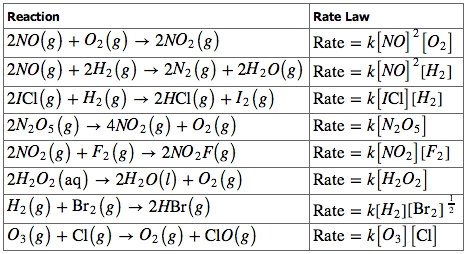
The Rate Law Concentration And Time Boundless Chemistry
How do concentrations affect rate according to the rate law.

. C If the concentration of HI is doubled the reaction rate will increase from k HI 02 to k 2 HI 02 4 k HI 02. If it takes half as long for the cross to disappear the rate is twice as fast. It is called the rate law.
The rate law for a reaction is a mathematical relationship between the reaction rate and the concentrations of species in solution. Therefore when there is increase in. The rate increases as concentrations decrease.
The rate of reaction is solely. If it takes 4. Rate laws can be expressed either as a differential rate.
The gradient of the graph also increases as a result to 0. Where R 0 is the initial concentration of the reactant when t 0 R is the. For the general reaction aAbB C aA bB C with no intermediate steps in its reaction mechanism meaning that it is an elementary reaction the rate law is given by.
There are four main factors that can affect the reaction rate of a chemical reaction. Rate laws can be expressed either as a. The rate law is the relationship between the concentrations of reactants and their various reaction rates.
This affects to the rate of reaction which is lowered the rate of reaction in order to conform the hypothesis that by increasing the concentration the rate of reaction will increase or the higher. As described in the previous module the rate of a reaction is affected by the concentrations of reactants. I have worked this out using the same equation as above.
Increasing the concentration of reactants generally increases the rate of reaction because more of the reacting molecules or ions are present to form the reaction products. Increasing the concentration of one or more reactants will often increase the. If you double the concentration you double the rate.
How does the rate law show how concentration changes affect the rate of reaction. Reactions rates are often determined by the concentration of some all. R kAxBy r k.
According to rate law rate of a reaction depends upon the concentration of the species participating in the reaction. As described in the previous module the rate of a reaction is affected by the concentrations of reactants. The equation for the rate law is.
The reaction rate will therefore quadruple. What is the rate of a reaction if the value of k is 3 and A. -rate of the reaction is directly proportional to the concentration of the reactant-kA1-slows down as the reaction proceeds because the concentration of the reactant decreases Ms-1.
For example Rate. The rate is independent. Rate laws or rate equations are mathematical expressions that describe the.
The reactant concentrations decrease. The rate law is the relationship between the rate of a reaction and the concentration of the reactants. According to the rate law how do concentrations affect rate.
The integrated rate equation for a zero-order reaction is given by. The rate law for a reaction is a mathematical relationship between the reaction rate and the concentrations of species in solution. If you triple the concentration you triple the rate.
The rate increases as concentrations increase. Rate laws or rate equations are mathematical expressions that describe the. Correct answer to the question According to the rate law how do concentrations affect rate.
What you can say is that the initial rate is proportional to 1t - or inversely proportional to t if you prefer. Remember that a number raised to the zero power is equal to 1 thus CO 0 1 which is why the CO concentration term may be omitted from the rate law. Kt R0 R or k R0 Rt.
Determining Rate Laws From Experimental Data Youtube
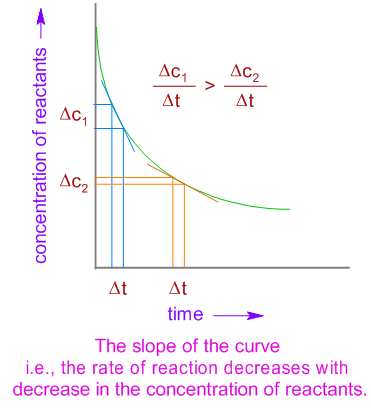
Factors Affecting Rate Of Chemical Reactions Adichemistry
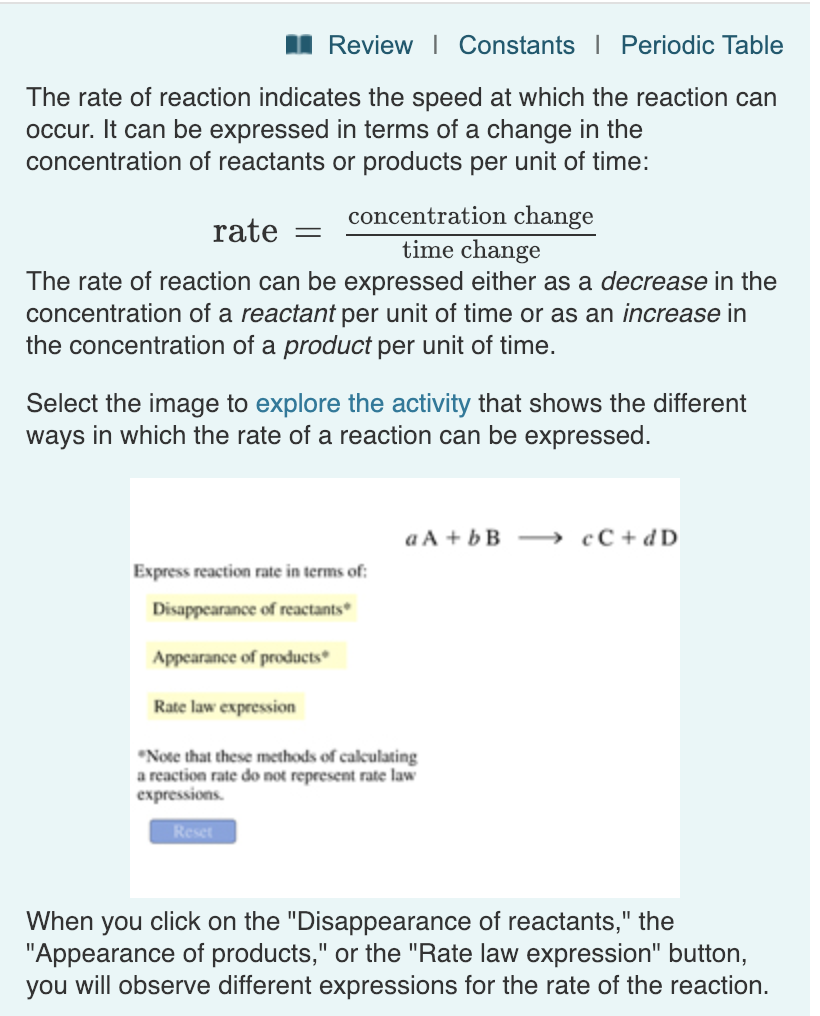
Solved Reviewi Constantsi Periodic Table The Rate Of Chegg Com
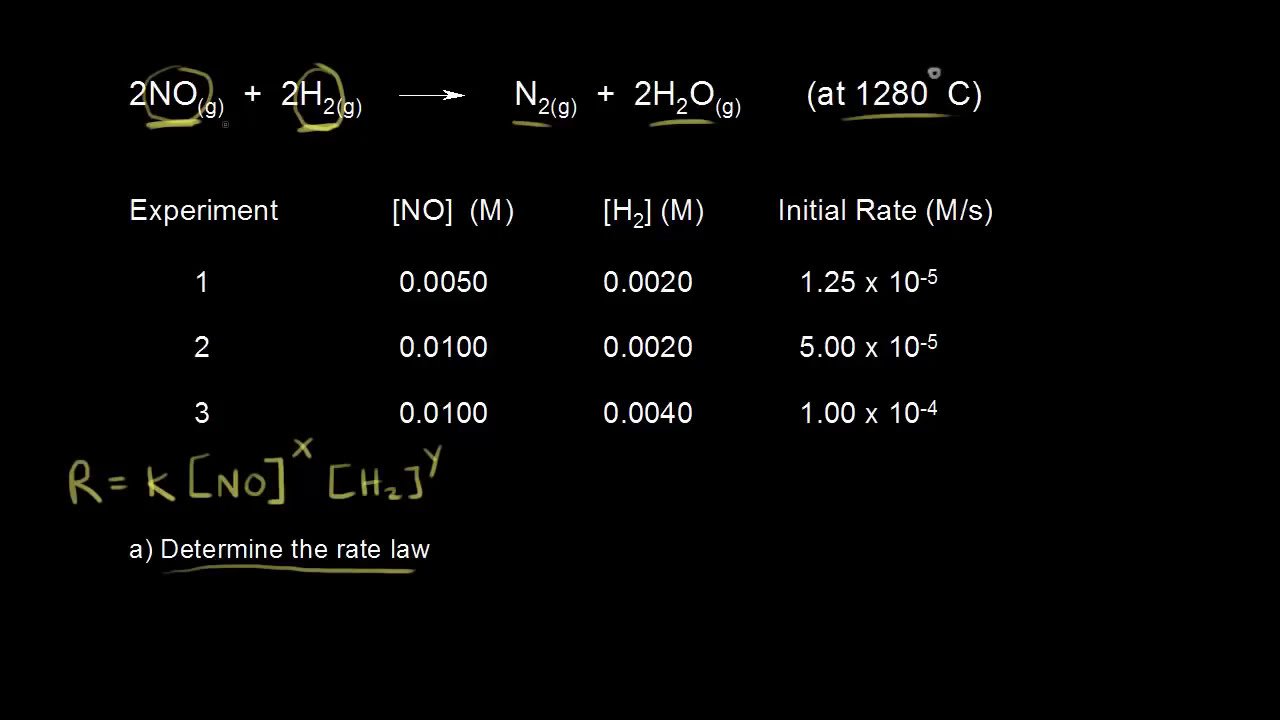
Determining A Rate Law Using Initial Rates Data Worked Example Video Khan Academy


Comments
Post a Comment